
Stories from the Front Line: Something to Pass On
A monthly reflection from inside rural medicine, written by Dr Trevor Lloyd.
I remember that day best as a day I learnt an important lesson, although, by then, that had become a normal occurrence for me in Vanuatu.
After my year as a family medicine registrar in New Zealand, I decided to defer the choice of where to settle into practice and applied for a two-year position advertised as a doctor on an outer island. I saw this as a challenging opportunity to work in another culture, to explore options of low technology medical care, and to take some responsibility for the health of a community rather than deal only with illness as presented to me. I was not disappointed.
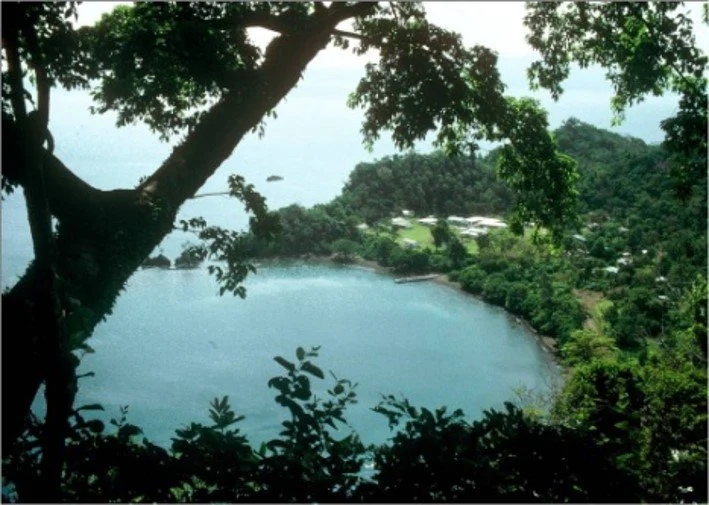
I worked for the newly independent government, based at a former Anglican hospital, a remnant of the fragmented health service previously run by the two former colonial powers of Britain and France and operated by various Christian missions. The hospital was built on a beautiful round bay that had once been the crater of a volcano. There was a post office, store and bakery. I received frequent gifts of fruit, vegetables, and fresh fish.
Communication was not easy. The official language is Bislama, a form of Pidgin English, which is highly developed as a language in its own right and is unintelligible to the average English speaker. A willingness to speak in Bislama throughout consultations and at occasional public events was appreciated. However, not all Melanesians spoke Bislama, as they would first learn one of the many local languages. The educated minority also spoke either English or French.
There were few doctors and few resources. During the day we had contact with the larger hospitals in Santo and Vila. Patients could be transferred out by air, but this was not always easy to justify, and at night was impossible. I learnt quickly to cope on my own. There were several patients with tropical infections—malaria, intestinal parasites, filariasis—that I had never seen before and had to learn to deal with. Other infections like tuberculosis were more common than in New Zealand.
One patient, about my own age, but with a young child, had previously been treated for tuberculosis. This seemed to have been unsuccessful. We had admitted her back into the hospital for a few weeks, trying a different range of the available medicines, hoping that she would continue them for a longer period. So far there had been no obvious improvement. There were other family around. The patient's relatives, especially if they were in for some time, would come in with food to cook in the hospital kitchen. Usually they would take turns at sleeping under the patient's bed and at taking care of her son. There was little more anyone could do.
I also remember that day as the day I had half a haircut. My soft straight hair was always a novelty to the people in Vanuatu. The trouble was nobody had any idea how to cut it. I discovered eventually that an Australian teacher at the secondary school around the coast had had some experience and would be prepared to do it. Every few weeks, when I thought I had time at the weekends, I would make the journey over to Joy for her to tidy me up.
It wasn't an easy trip. We had a couple of vehicles at the hospital, but they had been donated by aid organisations for public health work in the villages and at other times were kept for emergencies. If I wanted to go anywhere, I had to walk. There were the one Australian, two New Zealand and two British teachers at the school, one Swedish carpenter on the way there, and a Canadian fisherman and his family and an Australian plumber and his wife in the other direction. Until the unexpected arrival at the hospital of an American missionary—we all assumed he worked as a spy for the CIA and had nothing to do with him—that was the total expatriate community. It was a hot half hour or more of walking to visit any of them.
I got good at pacing myself while I walked. The road to the school went up and down between the coastline and a series of little lakes. I knew where there would be shade, and at which corners I could expect a slight cooling breeze. There were good views down to the sea. As I approached the grounds of the school, I would look down onto the beach and anticipate the opportunity for a swim before I came home. I always met people coming the other way, carrying loads back from their gardens, heading for the shop, or maybe visiting family. They would ask me, as is usual in the islands, "where are you going?" There is no point, as in more temperate countries, in discussing the weather. I would answer "I am going to the school” and carry on walking.
The teachers always made me welcome. Sometimes somebody would have given them a crayfish or other seafood, and I would be invited to share it with them. We swapped books and ideas and experiences and news from home. Joy was never that fast at cutting my hair—I'm not sure how much of this she had done in Australia really, but I was always grateful for her efforts. She would start on one side and methodically work her way towards the other. While she worked, she chatted away like a real hairdresser. It always ended up looking all right, and at least she managed to never cut my ears.
The day I remember, Joy had got about halfway across when there was the noise of an engine, the screeching of brakes, and a loud knock on the door. It was Paul, one of the nurses from the hospital. I was usually impressed by how the locals, in spite of the heat and difficulty, always managed to look calm and cool, but Paul that day actually looked hot and flustered. The young patient with tuberculosis was having trouble breathing; they needed me to come immediately. I abandoned the haircut, said a quick goodbye to the teachers, and returned to the hospital significantly more quickly than I had come.
The patient was indeed much worse. She was weak and unwell and was struggling to get any air in and out of her lungs. The nurses had put her on oxygen and tried some inhalers—we had no nebuliser. One of the nurses, who doubled as the pharmacist and radiographer, had taken an X-ray for me to look at. The X-rays always looked bad, and it was hard to say anything specific about this new one, but as expected it looked worse than before. I wondered if our patient on top of her damaged lungs from tuberculosis had a bacterial infection that we were failing to diagnose and treat. I explained to her that we were going to put in an intravenous line to give her some fluids and antibiotics.
The lady's body and face had shrunk over the course of her illness, but her eyes remained large and clear. She looked at me intently, almost pityingly, apparently comprehending but unable to express to me what she wanted to say. She turned to one of the nurses, who was from her own island, and spoke to her forcefully, choosing to use their own language, which I didn't understand. "Hatie", she said, "nam mate", meaning, I learnt later, "No, I'm dying." As a final action, she reached slowly into the locker beside her bed, pulled out a piece of coloured cloth that was folded into a bag containing a few coins, which I believe is all that she owned, gave it carefully to her son, and closed her eyes.
I nodded silently, unable to speak. I looked with fresh eyes at her wasted body, which had struggled for too long. I looked at the family members who had gathered to support her, at the nurses, who had understood her situation but had pinned their hopes on my ability to manage it as a medical emergency. I looked especially at her son, who had been standing beside her holding her hand, now clutching his little bag of money, and understood how difficult it must have been for her to come to her decision. I quietly abandoned my ideas of further treatment. The young woman died peacefully later that afternoon.
It was a week or two before I had the rest of my haircut. When I next had some time, I made my way back over the hill to the school and Joy finished the job. Afterwards we shared a meal with the other teachers—nothing special, just some rice and fish and fresh local fruit. We talked about the lovely children at the school, the bad news from around the world, how the All Blacks seemed to be struggling at the time, and how lucky we were to be living and working on the island.

This year marks a remarkable milestone for Trevor Lloyd, one of Dunstan Hospital’s senior clinicians. Trevor has just renewed his medical registration for the 50th time, with 26 of those years spent caring for patients at Dunstan Hospital.
He is a rural doctor, leader, writer, and long‑time advocate for our community. Trevor’s journey from his humble beginnings in Mataura and Cromwell, through his years around New Zealand, and the experiences gathered during time spent in places like England and Vanuatu - all before making Central Otago home - reflects a life lived in service of others. His creative writing has become a beautiful extension of that care, sharing stories that celebrate the people, places, and quiet acts of kindness that define our region. Whether in the ward or with a pen in hand, Trevor continues to give back in ways that deeply enrich the Dunstan whānau.