
Stories from the Front Line: Wairua
A monthly reflection from inside rural medicine, written by Dr Trevor Lloyd.
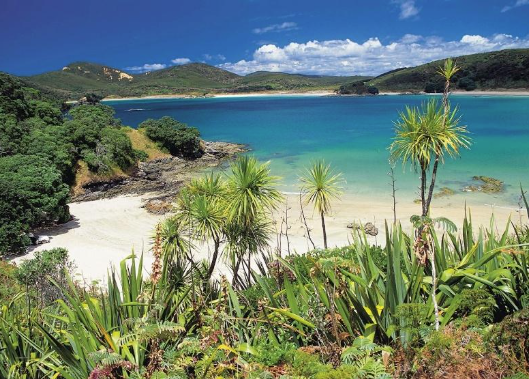
Nuku and Eru were brothers. Both were my patients. They were real people. Those are their real names. I am sure that neither of them would mind me using their names, or telling this story. Both were ordained ministers in the Anglican church—strong men with strong faith. They lived at Matauri Bay, one of the more stunningly beautiful parts of Northland. The settlement, tiny in those days, is high on a cliff above the sea, looking down at the curve of the beach, across to the Cavalli Islands, and out to the Pacific. It has since become something of a tourist attraction, partly because of a monument to the Rainbow Warrior, which has been towed north from where it was bombed by the French in Auckland and sunk in the Bay.
I first had occasion to visit there when I was making one of my attempts to learn the Māori language. A group of us were meeting one evening each week in a room at the Kaeo school, and we were to have a weekend residential on the marae at Matauri Bay. I was busy at the hospital that morning and arrived too late for the pōwhiri. I was anxious, not having visited the marae before, about not being properly welcomed. One of the younger locals, who recognised me from work, tried to reassure me that it didn't matter, and let me in a side door, but I remained uneasy. We slept that night as is usual on mattresses on the floor, surrounded by photos of the ancestors. During the night, there was a gust of wind; the photo of one of the old ladies fell off the wall and landed on my head. My transgression had been noted.
Several weeks later, in the middle of the night, one of the brothers' wives—I forget which one—was admitted to the hospital with severe abdominal pain. She became shocked, and died. The post-mortem showed a ruptured iliac artery aneurysm, a rare condition that is difficult to diagnose and difficult to treat. The extended family travelled to Whangārei to be with her while this cause of her death was determined. While there, in the street, the other brother's wife went to the back of the car to get something out of the boot. Another car failed to stop and ran into her. She was killed instantly.
The community naturally rallied in recognition of this double tragedy. Huge numbers of people made their way to the marae for the tangi. A little group of us from the hospital drove out to pay our respects. I was nervous, aware of how things had gone badly at the hospital. I was careful, after my previous experience at the marae, to follow the proper procedure. We kept our distance until called, approached respectfully, listened carefully to the speeches of welcome, and gave our greetings to the place, those present, and those who had gone before. It was easy to express our appreciation of the setting and the occasion, and our sorrow for what had happened. We were allowed to come in and mingle with the crowd and share our remembrances afterwards with some of the extended family over a meal, diligently put together for us by a few of the many helpers.
Nuku developed diabetes. I saw him frequently to help him with his efforts to control this, and to manage the complications. We both understood that his blood glucose was too high because the insulin in his body had become less effective, and that this could be helped by diet and exercise and medication, but there was clearly more to it than that. We talked a lot about his loss, his feelings about his illness, and his relationships with his family and other people. We talked especially about what Nuku called his wairua: his spiritual side, and the spiritual connection he felt with me as his doctor.
Apart from his work with the church, Nuku was a driver for one of the local transport companies. He worked hard on his physical health to maintain his heavy traffic licence. He had a large extended family who made sure that he was never on his own. He remained especially close to his brother.
One day, we were called to a crash on a local back road. We rushed out in the hospital van, the same vehicle we had used to get to the tangi. Nuku had rolled his sheep truck. Fortunately, there were no sheep in it at the time.
The truck was upside down with Nuku still strapped in the driver's seat, apparently uninjured but very frightened. There was an ambulance that had come up from Kerikeri, a helicopter from Whangārei on its way, and the local fire brigade was arriving. My role, I felt, was limited. I did my best to reassure Nuku that he was all right, and to dissuade the other more enthusiastic people around, who did not know him so well, from doing anything harmful, such as overloading his heart and lungs with intravenous fluid. Nuku was eventually cut out of his truck and flown to Whangārei, which was safer and easier than taking him back to our smaller service.
Nuku of course survived to tell his story. To my embarrassment, he believed probably until he died, some years later and well after I had left the area, that my presence on the day was the only thing that had kept him alive. It had certainly been a big day for him. I think I tried to persuade him that my knowledge of him or his illness or injuries, or any physical skills I might have possessed, had not been required. He remained excessively grateful. According to Nuku, it was my spiritual presence that had sustained him. "I could feel your wairua," he said.

This year marks a remarkable milestone for Trevor Lloyd, one of Dunstan Hospital’s senior clinicians. Trevor has just renewed his medical registration for the 50th time, with 26 of those years spent caring for patients at Dunstan Hospital.
He is a rural doctor, leader, writer, and long‑time advocate for our community. Trevor’s journey from his humble beginnings in Mataura and Cromwell, through his years around New Zealand, and the experiences gathered during time spent in places like England and Vanuatu - all before making Central Otago home - reflects a life lived in service of others. His creative writing has become a beautiful extension of that care, sharing stories that celebrate the people, places, and quiet acts of kindness that define our region. Whether in the ward or with a pen in hand, Trevor continues to give back in ways that deeply enrich the Dunstan whānau.